How to Design an Employee Rewards Program
A good rewards program is not a pile of gift cards. It is a clear link between the behavior you want and a reward people value, delivered reliably. This guide walks you from a blank page to the first card in a recipient's hands. It is written for the person who owns the program, not for a card expert.


Step 1: Start With the Goal
Decide what the program is for before you decide what it gives. Common goals include retaining employees, recognizing performance, reinforcing safe behavior, celebrating tenure, and boosting participation in a company initiative. Write the goal in one sentence, because it will drive every later decision, from who is eligible to how much a reward is worth.

Step 2: Define the Audience and the Trigger
Name exactly who can earn a reward and what earns it. A trigger can be a milestone, such as a work anniversary, a result, such as hitting a target, or a behavior, such as completing training or reporting a near miss. Clear triggers keep the program fair and easy to administer, and they make the reward feel earned rather than random.

Step 3: Set the Reward and the Budget
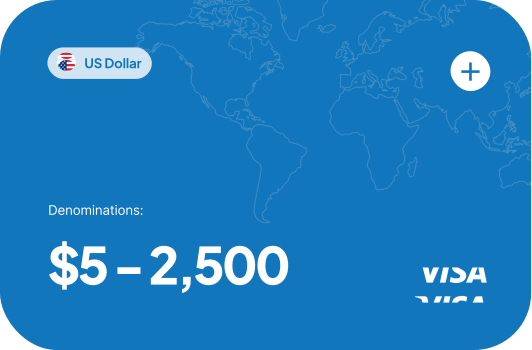
Match the denomination to the moment. A spot thank-you is not a tenure milestone, and underpricing a big achievement can do more harm than doing nothing. Build a simple budget: the reward amount multiplied by the expected number of recipients, plus any program costs. With Pre-Paid USA, fulfillment is included at no charge, which keeps the budget focused on the rewards themselves.
Step 4: Choose the Card and the Format
Pick the card family and the delivery format. Open-loop Visa or Mastercard cards give recipients the widest choice, while a merchant card points the reward at a category. Choose physical cards for in-hand recognition moments, or digital cards for instant delivery to a distributed or remote team. Many programs use both, matched to the moment.

Step 5: Brand It
A branded card makes the reward feel like it came from your company rather than a generic payout. Add your logo, colors, and a short message, and approve a free digital proof before production. This is where a reward becomes a piece of your culture.

Step 6: Plan Delivery and Communication
Decide how recipients will receive the card and how you will tell them why. A reward lands better with a message that names the achievement. For physical cards, plan shipping to one location or to each recipient. For digital cards, confirm you have accurate email addresses or phone numbers.

Step 7: Launch, Measure, and Improve
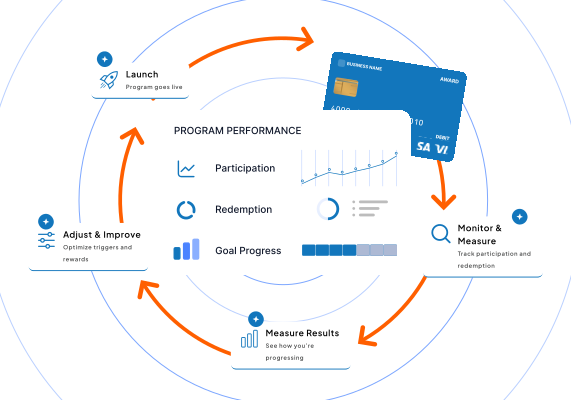
Start, then watch. Track participation, redemption, and whether the program is moving the goal you set in step one. Adjust the triggers or the amounts if the results are not landing. A rewards program is a living thing, not a one-time order.
A Note on Taxes
Reward cards given to employees are generally treated as taxable supplemental wages. Build reporting into your plan from the start, and confirm the details with your payroll and tax teams. See our guide to the tax treatment of prepaid cards.
Ready to Build Yours?
Get an instant quote or talk to a specialist who can help you design the program end to end.